Postingan

Menampilkan postingan dengan label safety

Differences Between Male and Female Pelvic Structures
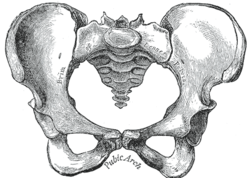
Gambar
by Shari This is the second part of my response to William Broad�s assertion that women�because of their inherent flexibility�are more apt to injure their hips in a �dangerous� yoga class or perhaps during a home practice. I think it is important to understand that whether or not women are more inherently flexible than men, there are significant physiological and anatomical differences in the male and the female pelvis. Have a look at these two pictures! Female Pelvis Male Pelvis As you can see here, the female pelvis is typically larger and broader than the male pelvis, which is taller narrower, more compact and stable. The female pelvis is thinner and it is more mobile partly due to hormonal changes that a woman cycles through and partly due to inherent structural attributes. There is also a difference in the size of the pelvic outlet specifically due to the reproduction capacity of the female The weight-bearing surfaces of the pelvis are larger and more irregular in the male, wherea...

The Get-Up-and-Go Test

Gambar
by Baxter Transportation by Melina Meza A while back I shared with you a study done that looked at �transfer� ability as a predictor of longevity (see From Independence to True Longevity ). Today while reading �Putting Prevention into Practice,� AAFP Journal, Dec. 15th, 2012, Vol.86, #12, one of my medical journals, I came across a brief article on preventing falls in community-dwelling older adults. �Community-dwelling� means living at home, not in a care facility. As I read some of the recommendations from the US Preventive Services Task Force (USPSTF), I came across a test I had not previously heard of: the timed Get-Up-and-Go test. According to the  USPSTF, this is a way to assess the risk of falling by testing the ability of a person to "get up out of an armchair, walk 3m (10 feet), turn, walk back, and sit down again." It seems the average healthy adult older than 60 years can do this in an average of 10 seconds or less. As I think about in connection to the four skills...

Friday Q&A: Is Yoga Bad for Backs?

Gambar
Q: Once a substitute yoga instructor stated that she didn't do anything every day, and that yoga can be bad for backs. Could you clarify why this opinion might be so? I love doing yoga, and would really like to know what's going on here. A: Yoga isn�t "bad for backs" but not all yoga asanas are appropriate for �bad backs.� As an example, let us look at a very common group of yoga poses, forward bends, which can be thought of as both �good� and �bad� for someone with a back injury. Forward bends can be bad in the sense that if too much force is generated by trying to come into the position at the vulnerable area in the back, this will most likely cause more pain and injury. Not bending from the hips to come forward but using the arms as a lever force to pull into a position is unsafe. However, learning to move from the hip joints and keeping the spine in its neutral curves is a very different way to practice forward bends. This is safe because soft tissue restrictions ...

Fast Exercise vs. Slow Yoga

Gambar
by Nina   Image "Borrowed" from The New York Times The exercises should be performed in rapid succession, allowing 30 seconds for each, while, throughout, the intensity hovers at about an 8 on a discomfort scale of 1 to 10, Mr. Jordan says. Those seven minutes should be, in a word, unpleasant. The upside is, after seven minutes, you�re done. �New York Times Did anyone else happen to see the recent New York Times seven-minute exercise routine? Well, I did. And my first response was irritation. Something seemed so wrong to me about the routine. At first, I thought it was the seven minutes part. That seemed to me a crazy amount of time for doing twelve exercises, and I thought it would be healthier and more effective to divide up the routine into, say, three or four different routines, and cycle between them on different days. That way, you could spend more time on each exercise and not do the same thing every day (which could lead to boredom or even injury). But even after I h...

Is Yin Yoga Right for You?

Gambar
by Baxter We recently received two questions regarding a style of yoga known as Yin Yoga, in which one assumes certain yoga poses, often done sitting or down on the floor, and passively holds the poses for 3-5 minutes.  An example of a pose done in the Yin way would be Sukasana (Seated Crossed Legs) with a forward fold, done passively for the allotted time. As a disclaimer, I have limited personal experience with Yin Yoga, but have done several two hours sessions over the years. According to articles that can be found online at Yoga Journal Magazine, as well as the websites of two well-known teachers of Yin Yoga, Sarah Powers and Paul Grilley, Yin Yoga is more than just doing yoga asana a particular way. There is a focus on not just affecting the physical structure of the muscles, bones and connective tissue, but reportedly also influencing the energetics of the body via stimulation of certain Chinese meridians associated with the acupuncture/pressure systems. And there is an empha...